A testimonial from Romania: interview to Iuliana Chindis
Dancing as nonverbal communication of emotions: interview to Iuliana Chindis
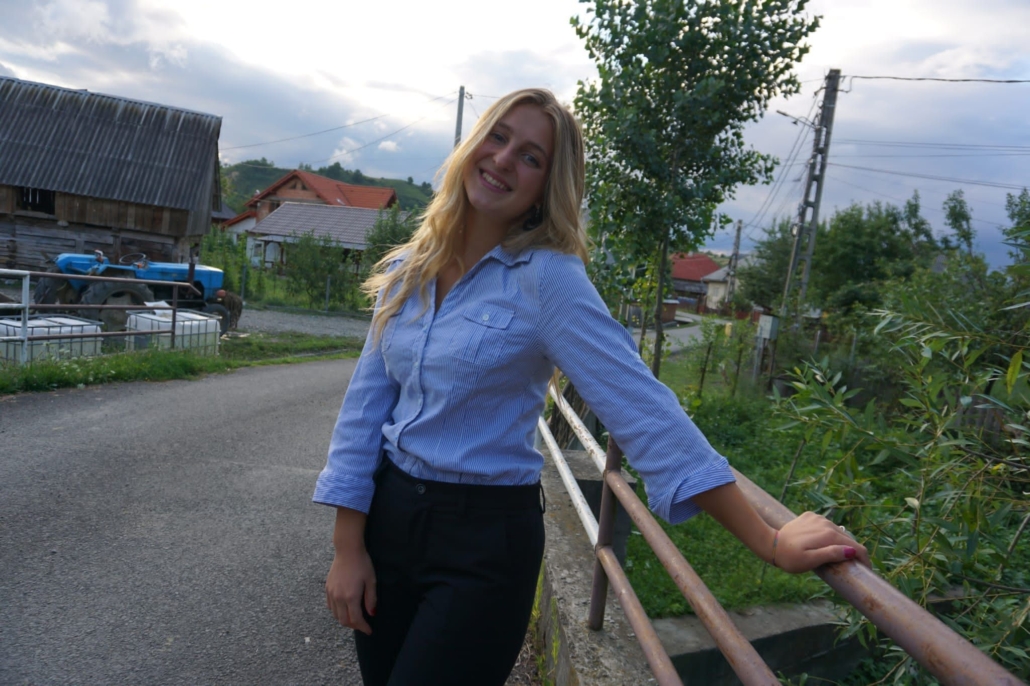
During dancing classes, we had the opportunity to meet a lot of participants who took part in the project. Among them is Iuliana, a twenty years old girl who moved from a little village in the north of Romania to the capital in order to study at the University. We will be able to discover more about her experience as a course attendant and to understand the important value of dancing as a tool of non- verbal communication for expressing our feelings.
Hi Iuliana, could you tell us what was your main reason to participate in the dancing classes?
Personally, I found by chance the brochure of “You Dance” Project in the library of my university and by looking at the activities I immediately felt it could be interesting to take part in it. My friends and I were curious about the project and we discussed whether to go or not. Probably what made me take the decision was the idea of a group of people coming from a different background but all of them sharing the tool of dancing. In fact, I feel so attached to dancing because as a child I used to practice it and I always believed in the power of and in its importance for expressing our inner emotions.
How would you describe your experience in the sessions of dancing?
As a participant, I found dancing classes very inspiring because we were not by ourselves, but we danced together with another participant so that we could have a better connection in the shared space. That’s why dancing helped me both individually, because of the way of dealing with emotions, both collectively since teamwork was considered necessary for achieving the desired results.
What I appreciate the most is that there was always communication between the participants and the teachers. They used to help and to interact actively with the target group and in case of any difficulty they were patient, so that’s why my feedback is positive.
Would you suggest the “You Dance” program to other youngsters refugees or migrants?
Yes, to be honest I think that people will undoubtedly benefit from it. First of all, it has got an important social issue which is the inclusion of foreign people in the Romanian society through dancing, so that a process of inclusion is set up.
Secondly, young people have got the opportunity to enhance relationships and to get to know new people with whom they can share experiences and meet them in a different context from this project.
Have you got any suggestions or comments to give to the teacher who held the classes?
Honestly, I think that dancing classes had a lot of advantages and were well organized. At the same time there were some cases in which people coming from a particular background faced difficulties while interacting with the other participants, maybe because of some difficulty in the language. That’s why in my opinion, someone who spoke different languages could have helped them and, at the same time, if there was psychological support they could have benefited from it in order to overcome some difficult personal experience.


Leave a Reply
Want to join the discussion?Feel free to contribute!