
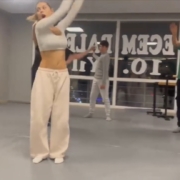
“In-class” dance lessons (Activity 3) continue in Turkiye, giving good results!
In Türkiye, dance-based interventions activities, organized in #Eregli by ECEM Ballet, for “You-Dance” project Activity 3 are continuing in the best way also with Turkish youngsters. The selected local youngsters continued in these weeks the “in-class” activities, which will probably end at the end of this month at the ECEM Ballet dance studios. All activities are designed to enhance their physical and emotional well-being through dance. The “in-class” activities (which will last 2 months in total) started in the proper way and, after some weeks of dance lessons with ECEM instructors in Eregli, some good results were registered within the local target group, both at physical and spiritual level for youngsters.
You-Dance activities continued in Eregli, in Türkiye, for all November 2024 with ECEM Ballet. 30 young participants are still taking part in the Erasmus+ project and, after several “in-presence” dance-based interventions lessons, we are all seeing the positive results of classroom activities in terms of individual and social awareness. Youngsters discovered also to move rhythmically with group consciousness and to be one. What could be a more creative force than being able to intervene in life with dance? 🎊🤩🧐🎯
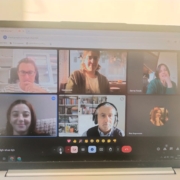
November YOU-DANCE online regular meeting was held today!


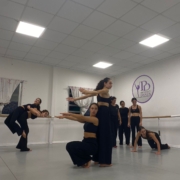
Sharing emotions during You-Dance class A3 activities held in Italy!


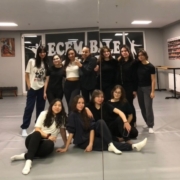
“In-class” dance lessons (Activity 3) started also in Türkiye!
✨ “In-class” dance lessons (Activity 3) started also in Türkiye!💃
Dance-based interventions activities, organized by ECEM Ballet, started also in #Eregli for “You-Dance” project Activity nr.3.
The first A3 meeting with the selected local youngsters was held on Friday, October 25th at 18:00. More than 30 young people has participated and were engaged in a variety of activities designed to enhance their physical and emotional well-being through dance. 🎶
ECEM Ballet was very glad to host in their headquarter local young people between the ages of 16 and 20, who said – after the experience of the first dance lesson – that they really enjoyed, they were satisfied to be part of this initiative and told they are just looking forward to come back to the next class dance lesson at ECEM Ballet’s dance school. Activities 3 will continue also in Eregli (in the county of Zonguldak), thanks to the professional organization of ECEM Ballet School.
Please find attached a short video of this first A3 dance lesson. Stay tuned for more! 🎊🧐 🎯
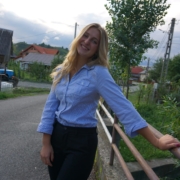
A testimonial from Romania: interview to Iuliana Chindis
Dancing as nonverbal communication of emotions: interview to Iuliana Chindis
During dancing classes, we had the opportunity to meet a lot of participants who took part in the project. Among them is Iuliana, a twenty years old girl who moved from a little village in the north of Romania to the capital in order to study at the University. We will be able to discover more about her experience as a course attendant and to understand the important value of dancing as a tool of non- verbal communication for expressing our feelings.
Hi Iuliana, could you tell us what was your main reason to participate in the dancing classes?
Personally, I found by chance the brochure of “You Dance” Project in the library of my university and by looking at the activities I immediately felt it could be interesting to take part in it. My friends and I were curious about the project and we discussed whether to go or not. Probably what made me take the decision was the idea of a group of people coming from a different background but all of them sharing the tool of dancing. In fact, I feel so attached to dancing because as a child I used to practice it and I always believed in the power of and in its importance for expressing our inner emotions.
How would you describe your experience in the sessions of dancing?
As a participant, I found dancing classes very inspiring because we were not by ourselves, but we danced together with another participant so that we could have a better connection in the shared space. That’s why dancing helped me both individually, because of the way of dealing with emotions, both collectively since teamwork was considered necessary for achieving the desired results.
What I appreciate the most is that there was always communication between the participants and the teachers. They used to help and to interact actively with the target group and in case of any difficulty they were patient, so that’s why my feedback is positive.
Would you suggest the “You Dance” program to other youngsters refugees or migrants?
Yes, to be honest I think that people will undoubtedly benefit from it. First of all, it has got an important social issue which is the inclusion of foreign people in the Romanian society through dancing, so that a process of inclusion is set up.
Secondly, young people have got the opportunity to enhance relationships and to get to know new people with whom they can share experiences and meet them in a different context from this project.
Have you got any suggestions or comments to give to the teacher who held the classes?
Honestly, I think that dancing classes had a lot of advantages and were well organized. At the same time there were some cases in which people coming from a particular background faced difficulties while interacting with the other participants, maybe because of some difficulty in the language. That’s why in my opinion, someone who spoke different languages could have helped them and, at the same time, if there was psychological support they could have benefited from it in order to overcome some difficult personal experience.
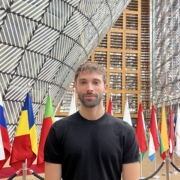
A testimonial from Romania: interview to Joao Carlos Cordova (Brasil)
Dancing as a Bridge – Integrating Adolescents Through Art: interview to Joao Carlos Cordova (Brasil)
In this edition, we had a quick talk with João, one of the assistants of the You Dance project, about the A3 activity. We discussed about the dance-based interventions phase, the challenges he expects to encounter along the way and the benefits of the project. Through this conversation, we can have a better understanding of the impact of dance on these young individuals and his views about the broader goals of the You Dance project.
What motivated you to get involved in this project of dance classes?
My main motivation was the opportunity to use art as a tool for integration, since I have a big admiration for arts in general – mainly performing arts, like dance. From my point of view, social integration is fundamental for common shared well-being, and adolescence is a very important step in everyone’s life.
What are the main challenges expect to face while working with migrant and refugee adolescents?
I think challenges can be various, and it can enrich even more the project. Since we have candidates from numerous origins and different experiences, we are thinking of lessons that can reach everyone. We are very lucky to have with us teachers with a rich background of methods and teaching experiences.
For the integration part, it will be important to create a friendly and welcoming environment by reinforcing key values to stimulate acceptance, such as respect, self-expression, tolerance and consensus. It will be important to make sure that the adolescents know they are in safe space where they can try new things, make mistakes freely, observe others without judgments or pressures, and learn from both their own and other’s experiences. I think this is the best way to help them create a sense of belonging, which is so important in a place where everyone is learning.
What strategies do you use to engage adolescents from different cultural backgrounds?
Dancing is a deeply emotional form of expression, and being able to understand your own feelings and those of the others is fundamental for develop empathy and, consequently, for creating connections. Also, encouraging open dialogue and sharing personal experiences can facilitate mutual understanding and respect.
How do the dance classes help with the integration of adolescents into the local community?
Making new connections, strengthening self-confidence, encouraging teamwork, cooperation and empathy.
What message would you like to leave for others who are considering getting involved in similar initiatives?
Learning is always beneficial, so feel free to embrace new experiences and challenge yourself. You can achieve valuable results through teamwork and cooperation.